
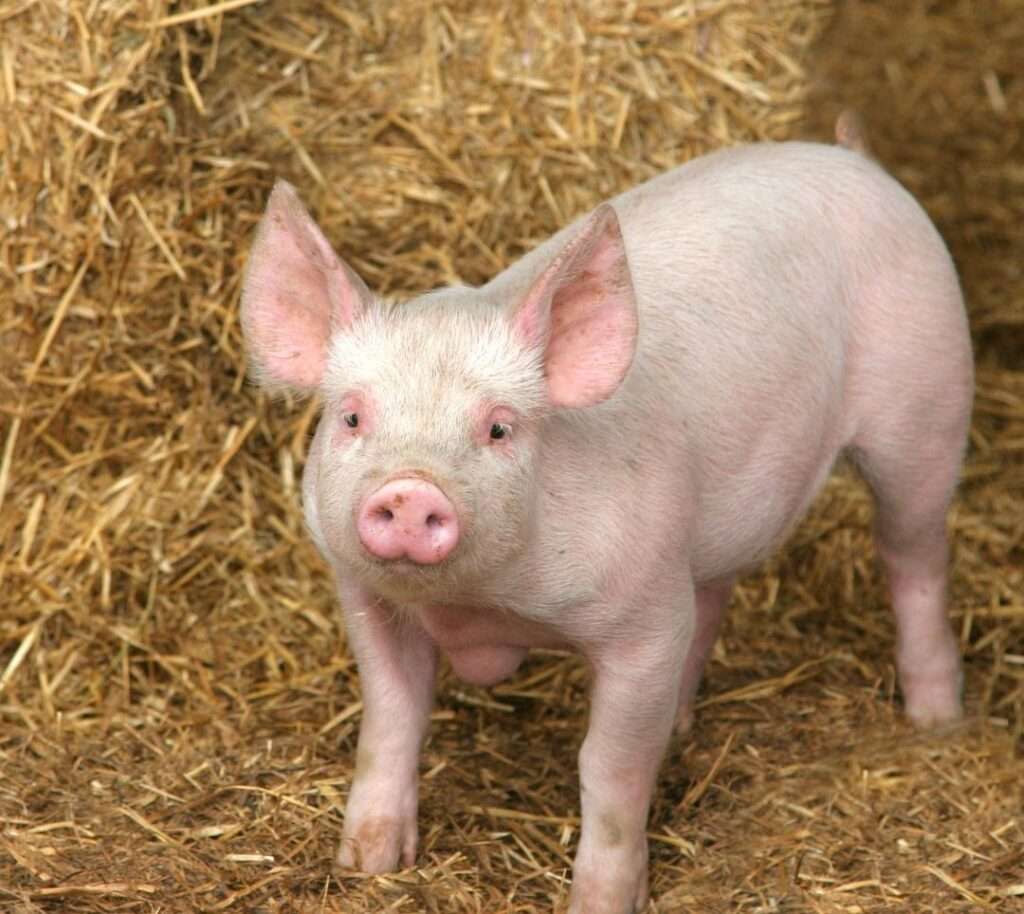
Animals endure immense suffering on factory farms, and many individuals and organizations are working to improve their living conditions. But are these efforts enough?
Toni Vernelli, former head of communications for the Veganuary program, believes they are. She argues that eliminating animal products from one’s diet is a waste of time and has said that “diet change shouldn’t even be a part of the conversation.” Vernelli now works for FarmKind, an organization that encourages people to set aside personal dietary change and instead donate to nonprofits focused on improving conditions for farmed animals.
I found the FarmKind website confusing. The organization claims its mission is to “end factory farming,” but it’s unclear what that actually means. Does ending the use of gestation crates for pigs or battery cages for laying hens—important reforms, to be sure—amount to ending factory farming? Or is it simply making factory farming somewhat less cruel?
More importantly, can factory farming really end while we continue to produce the hundreds of millions of animals slaughtered every day to meet current demand for meat, dairy, and eggs? A transition to smaller, more humane farms would almost certainly require a significant reduction in animal food consumption. And because welfare improvements often increase greenhouse gas emissions, these changes could actually worsen environmental outcomes unless we encourage people to eat fewer animals and animal products.
FarmKind does support the development of plant-based meats and efforts to make plant foods more accessible. But if outreach and education around dietary change are abandoned, where will the demand for these products come from? If diet change is “out of the conversation,” why would people feel motivated to seek out plant-based foods at all?
I don’t object to the kinds of solutions FarmKind promotes. But I disagree with the claim that veganism is meaningless or impossible—and with what appears to be an active effort to discourage it. FarmKind’s Forget Veganuary website portrays veganism as unpleasant and pointless, suggesting that going vegan makes you annoying and guilty, and claiming it helps only 22 animals per year.
Those numbers don’t ring true to me. For example, the USDA reports that Americans consume an average of four pounds of shrimp per year. If we’re talking about jumbo shrimp—the kind served in shrimp cocktail—that alone could amount to roughly 60 animals per person per year. Advocating for shrimp may seem far-fetched to many people, but FarmKind, which lists the Shrimp Welfare Project as one of their recommended charities, clearly believes these creatures deserve moral consideration. Shouldn’t they be included then in the number of animals we vegans are helping?
And what about the countless sea animals killed as bycatch in commercial fishing? Or the wild animals who die in crop production—deaths that are higher for animal agriculture, given the enormous volume of crops grown for feed? None of these animals appear to be included in the “22 animals” figure.
As I write this on New Year’s Eve, I don’t have traditional resolutions—just a continued commitment to helping animals in the ways available to me. That includes:
- Supporting rescue, welfare, and vegan organizations financially when I can.
- Working with a local lobbying group to improve animal welfare legislation in my state.
- Doing hands-on work with a local TNR (trap–neuter–return) program for community cats.
- Contributing articles on plant-based diets to nutrition journals.
- Writing a Substack newsletter targeted to omnivores to encourage reductions in animal consumption and gently introduce ideas about veganism and animal rights.
- And (hopefully) devoting more time to this website to share evidence-based information on vegan nutrition and activism.
And yes, for the 34th year,I will continue my personal commitment to veganism. It’s a choice with measurable impacts (those 22 animals, plus shrimp, plus field mice) and others that are harder to quantify. I move in many non-vegan circles, and I know my own diet has encouraged others to try vegan cooking. At my church—where only five of us, including a four-year-old, are ethical vegans—every event now includes vegan food, and sometimes only vegan food. Eight years ago, vegan food wasn’t on the congregation’s radar at all. Our meat-eating neighbors send us vegan recipes and invite us over for vegan meals. My family is exploring more plant-based meats on their own after I introduced them to some of my favorites.
I can’t measure the impact of these changes precisely, but I think they matter. They help normalize plant-based eating and open the door to deeper conversations about why it matters.
There’s also something more fundamental at stake. Embracing a vegan ethic challenges the dominant narrative about our relationship with animals. It confronts the speciesism that underlies not only factory farming, but animal exploitation more broadly. That’s a heavier lift and a longer-term strategy than passing legislation to ban gestation crates for sure. But addressing root causes has to be part of any serious effort to solve the problem.
We need to do better for animals in every way we can. That means harm-reduction efforts like welfare reforms, and it means sharing a vegan ethic when people are open to hearing it. It means taking a clear stand against animal exploitation by accepting responsibility for our own consumption choices. As we head into 2026, I remain convinced that veganism is still a meaningful ethic and an impactful choice.
Discover more from The Vegan RD
Subscribe to get the latest posts sent to your email.
This is an important post, . January marks my 40th year as a Vegan, and I can attest to the fact that it is easier and more delicious than ever. I agree that we should do everything we can to help animals, including not eating them or their by- products.
Thank you, Patti. I’m so grateful we’ve been able to work together on these issues for so many years.
Ginny- i hVe been following you for years. Keep up your good work. I’ve been vegan 30+ years for other reasons. Keep doing what you believe in
Thank you, Robyn!
Beautifully written, Ginny Messina. Thanks SO much. I too am enterng my 34th year of being vegan! You were an inspiration back then and still are. In Canada, we have the Animal Justice group that is taking powerful and inspirational legan actions on behalf of animals. I sure appreciate such actions, including those by PETA. My sister who lives in Paris says vegan eating is spreadeing effectively in France. I appreciate the work of so many who are effecting these changes. Love to you all. Vesanto Melina
Thank you for this comment, Vesanto, and for your work on behalf of animals. It’s good to hear that plant-based eating is becoming more popular in France!
Yes veganism is possible. I was a strict vegan from 16yrs of age to 46yrs of age. I was in the best health. My health deteriorated when I started to consume animal products. I had forgotten what led me to veganism and when I remind myself, it saddens me on the treatment of livestock..I grew up in a farm and witnessed my father butchering a pig. I cannot unsee those vision. I do agree that veganism improves health and in turn it saves animal cruelty.
Yes, I would imagine that image of a pig being butchered would stay with you forever. I hope you’re in good health now. Thank you for your comment and for sharing your experience.
Thank you, Ginny, for this wonderful reminder of the impact one person can have on their community by truly walking the talk—not to mention the reminder of how adorable and intelligent pigs are. This year, I took a sabbatical from my dietetic private practice to educate my own children at home, and during that time my hosting opportunities within our church community and beyond have grown tremendously. We offer vegan food and treats to and share recipes with a growing group of moms, who then go on to influence their own families. Christmas was my responsibility this year, so I organized a completely vegan family Christmas dinner and Boxing Day brunch – something I’ve been hoping for over ten years. Here in Alberta there are a few rescue farms doing great work, and I was privileged to take my kids to tour FARRM and cuddle with these tame sheep, goats, horses, cows, and pigs that would have otherwise met their maker. Your work and the ripple effect it has made is evidence that even small daily choices can have a big and lasting impact on generations to come. Many thanks you and Mrs. Melina for paving the way for my own journey which started 15 years ago when I met her at the U of A in my second year of Dietetics! Cheers and Happy New Year to you!
Brianna, RDN – Edmonton. Alberta
Brianna, I love hearing about your experience with introducing vegan food to your community. Yes to these little acts of personal activism!! It really does make a difference.
I was a flexitarian but it’s my new year’s resolution to go 100% vegan. My motivation is: all-of-the-above. Toni Vernelli trying to control my behavior for no good reason just gives me more motivation. They must think I’m pretty stupid.
Pieter-Jan, that’s so great that you’re moving toward a vegan diet. I wish you the best of luck with this. And my best advice for this is to just ignore any stumbles or set-backs and keep moving forward.
As I enter my 44th year of being vegan, I can’t think of anything more fundamental to animal rights than eating this way. It centers compassion in my actions and my personal ethics. It is healthy and it is daily. Being vegan is basic to my whole life philosophy. I would find it impossible to knowingly eat another living, breathing creature.
Thank you for this — I love your comment about veganism being “daily.” It’s a reminder that no matter what else is happening in our lives, we can make some small difference with our usual choices.
Wow. So nice to hear the above comments. Ginny, I too have been following you for years, and so enjoy your updates. I thought I had some real time being vegan (28 1/2 years), but feel like an adolescent compared to y’all! Having moved from liberal and more health conscious SoCal to Georgia, I am grateful to have a progressive city like Athens, GA. I still love hearing the axiomatic comment from the uninitiated , “ what do you do for protein “? I want to thank you Ginny for doing what you do, and there is such truth and compassion in what you wrote. Please , keep doing what you do….a sane and considerate voice, with sound dietary science!
Thank you so much for this! 28 1/2 years sounds pretty great. And I guess we’ll never stop hearing the “where do you get your protein” question, but at least it means someone is open to hearing the answer. 🙂
thank you for this post. It so excellently summarizes why it is so important for more people to join us in being ethical vegans. Fort me being vegan gives me an opportunity to be kinder and more compassionate on a daily basis in a world in desperate need of those things (IMHO). The simple act of those choices provides me with a way to feel a little less disempowered. Thank you for all you do in this area.
Have a blessed new year.
Absolutely — this is one of the reasons why I started my substack. It was to show people that our daily choices have meaning and impact. That is truly empowering.
Thank you Ginny for saying this so well and for all you do for animals, people, and our planet.
Thank you, Reed. I’m so grateful to have worked over the years and to continue working on all these issues with you.
This is the best way of being vegan! And the best reason. Being sustainable means that you care. Care about animals and your health too. Not because it is a trend.