
A meta-analysis of nine studies involving 1.8 million adults found that vegetarians have a lower risk for cancers of the pancreas, breast, prostate, and kidney as well as lower risk for multiple myeloma. Surprisingly, it also found that vegans had a 40% higher risk for colon cancer.
For a couple of reasons, I’m not especially alarmed by these findings. The authors noted that the statistical power was low since there were so few vegans with cancer in this study. They wrote:
“The higher risk of colorectal cancer observed in vegans is based on only 93 incident cases among vegans in seven studies in the UK and US, with <10 cases in vegans in five of these studies and therefore should be interpreted with caution.”
Also, the findings were no longer significant when the researchers excluded the first 4 years of follow-up. That’s important because cancer develops over a long time and can’t necessarily be linked to subjects’ more recent diet choices.
But while I don’t want to overstate the significance of these findings, I do want to consider whether there might be something we can learn here to make vegan diets better.
One potential risk factor for colon cancer is low calcium intake. Calcium is thought to protect against colon cancer by binding bile acids and free fatty acids in the colon, which could lower their potentially carcinogenic effects. It’s the unabsorbed calcium from our diet that ends up in the colon and gives this protection. That means that getting enough calcium to protect against colon cancer is different from meeting calcium needs to support bone health.
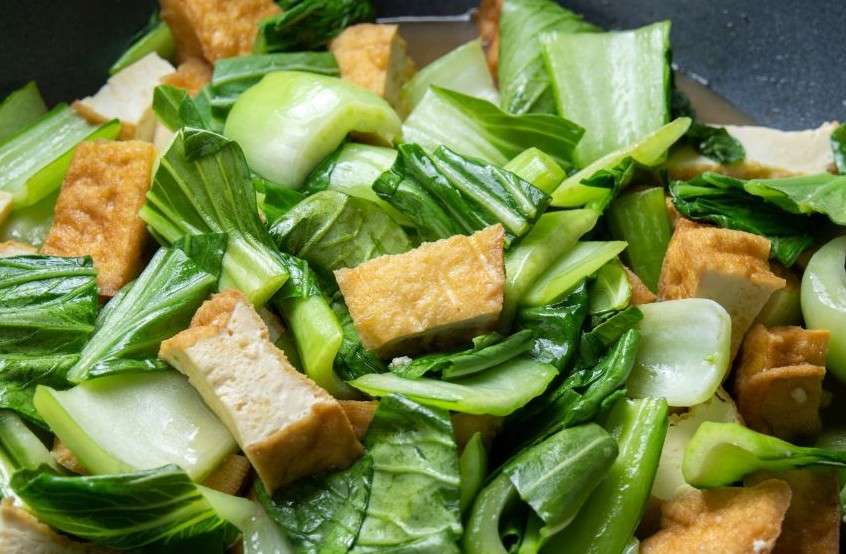
For bone health, what matters is how much calcium you absorb from the intestines into the blood. In fact, you can get away with a fairly low calcium intake if you’re eating foods with high calcium bioavailability. As an example, 3 cups of fortified soy milk (300 mg calcium carbonate per cup) provide 900 mgs of calcium and we absorb about 30% of that, or around 270 mgs. Three cups of Chinese cabbage have only about 475 mg of calcium, but it’s absorbed at a high rate – close to 54% — so we end up absorbing about 255 mg of calcium or close to what you’d get from the milk. The impact on bone health should be about the same, despite the lower total amount of calcium in Chinese cabbage.
| Total Calcium Content | Percent Absorption | Total Calcium Absorbed | Non-absorbed Calcium | |
| 3 cups fortified soy milk | 900 mg | 30% (for calcium carbonate) | 270 mg | 630 mg |
| 3 cups Chinese cabbage | 475 mg | 54% | 255 mg | 220 mg |
But look at what you’re not absorbing – over 600 mg of calcium from the milk vs a little over 200 from the Chinese cabbage. That’s a lot more calcium from the milk making its way through the intestines to the colon.
In the past, I’ve talked mostly about absorbing enough calcium to protect bones. Now my thinking about this is shifting and I’m more inclined to recommend that vegans also aim to meet the RDA. For many of us, this means using fortified foods or supplements. It’s worth it, though, since there are good reasons related to health (for example, high intake of dairy foods is linked to higher risk for prostate cancer), the environment, and ethics for getting calcium from plant foods
If, like me, you eat lots of cruciferous veggies, that’s great for your bones, but you may still need to regularly consume calcium-rich foods like extra-firm calcium set tofu, fortified plant milks, and fortified juices. There’s lots of variation here since the calcium content of both tofu and plant milk varies. (And for milk, the type of added calcium affects absorption rates.) In my refrigerator right now, I have Nature’s Promise Oat Milk with 350 mg of calcium, Nature’s Promise Soy Milk with 300 mg calcium, and Silk Soy Milk with 475 mg calcium. These are all great choices, and I wish I consumed them more often. But in fact, plant milk plays a small role in my own diet (the ones in the fridge are for my husband’s smoothies and cereal) so I supplement with calcium – usually 300 to 400 mg per day divided into two doses. Calcium supplements are associated with lower risk for colon cancer while also providing reasonable amounts of absorbed calcium for bone health.
One other note about plant-based food choices for calcium: Leafy greens like spinach and chard are high in calcium but most of it is bound to oxalate. It’s not available for absorption and probably not much is available to bind with bile acids in the colon. The calcium in spinach most likely is not helping either your bones or your colon. (Although spinach provides plenty of other compounds that lower cancer risk and protect bone health.)
Finally, it’s interesting that pescatarians had a lower risk for colon cancer in this study. Since pescatarians consume both dairy foods and fish, they may be getting some dual benefit of omega-3 fats plus calcium. But the evidence for a protective effect of omega-3s is less convincing compared to calcium. (Jack has written about this study on the Vegan Health site and he promises to look more into the relationship of omega-3s to cancer. As always, I’ll be interested to see what he comes up with.)
I want to reiterate that I’m not at all convinced that vegans, even with a lower calcium intake, have a greater risk for colon cancer. A healthy vegan diet should clearly offer protection against colon cancer given that we eat lots of fiber, lots of health-supporting bioactive compounds, and we don’t eat red meat. But we’re not immune to this or any other cancer, and we should be open to any improvements we can make.
Colon cancer is especially concerning since it’s on the rise among younger people so that recommendations are now to start colonoscopy screening at age 45 instead of waiting until you’re 50. Eating plenty of fiber-rich whole plant foods, limiting alcohol, and getting regular colonoscopies is good advice for vegans and for everyone else. So is eating a calcium-rich diet.
Discover more from The Vegan RD
Subscribe to get the latest posts sent to your email.
Thanks for this, Ginny! It’s easy to forget other functions of calcium when we’re so focused on bone health. I’m sure we learned about these functions of calcium in the gut in school but they certainly are not top of mind. I have many of my vegan clients on ~333mg supplemental calcium (1 of the DEVA cal-mag plus tabs) to help them reach the DRI (unless someone is consuming multiple cups of cooked greens rich in absorbable calcium and/or drinking multiple cups of calcium-fortified plant milk daily and/or eating multiple cups of calcium-set tofu daily, it’s tough for vegans to reach the DRI without a supplement) and this reaffirms that recommendation and it’s something I will continue doing. This is also another reason a varied plant-based diet inclusive of fortified foods is so important!
Thank you, Taylor. And yes — yay for fortified foods!!
My experience was 10 years of vegan diet with little to zero oils or fats. It appears to me that today, vegan foods in restaurants and recipes contain more oils and fats than are necessary. They make up for calories lost from animal products but I question the health affects of large amounts of daily oils and other fats.
Thank you for this, Judy. I agree that consuming large amounts of added fats is probably not a good idea. But we don’t need to go entirely in the other direction and avoid them completely. Including some healthy plant fats in meals doesn’t raise risk for chronic disease.
Do you have specifics on what type of Calcium supplements “are associated with lower risk for colon cancer?” Calcium supplements such as carbonate are consistently found to be contaminated with high levels of heavy metals, which are carcinogens, Also would be concerned with hypercalcimia taking calcium supplements in addition to a high crucifer diet
Calcium carbonate is specifically associated with a lower risk of colon cancer. I wouldn’t be concerned about taking a daily supplement of calcium along with 1-2 cups per day of cruciferous vegetables. It’s only a problem when people are taking upwards of 2,000 mg of calcium per day — often from chronic use of antacids.